
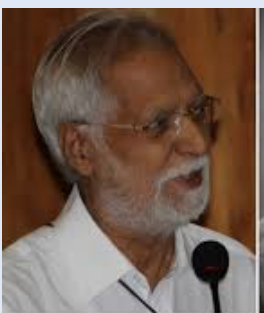
This initiative honors the eternal memory of my mentor, Prof. B. K. Passi Ji. In April 2014, he challenged our frameworks to ensure that we built their outreach as a ‘competition for goodness’ and in the true spirit of Sarvodaya. This open archive is our living answer to his call.
Empowering the Elite Educator
Today, technology floods schools, and someone tells teachers that mastering artificial intelligence is the key to the future. But here is the unspoken truth: in the absence of a deep cognitive framework, learning or mastering even the best AI tool will not yield any significant results. Technology merely amplifies what is already there. If the underlying pedagogical logic is shallow, the output remains shallow.
True educational transformation requires an exposure to elite cognitive tools that are desperately needed by all, yet are currently unavailable anywhere else.
Moghe Education Consultancy is deeply committed to developing the knowledge infrastructure for Bharat. In alignment with this national mission, we have named this initiative “Gyan Ganga”—a continuous flow of transformative wisdom. To create urgent, widespread awareness on this crucial educational gap, Moghe Education Consultancy is delivering this foundational framework completely free of charge.
Cohort Structure & Flexible Participation
To accommodate a large national audience while respecting the intense schedules of working and training educators, Project Gyan Ganga operates on a highly organized, 10-week flexible tracking system.
1. Choose Your Preferred Weekly Track
Sessions run on alternate days every week. You simply choose the weekly anchor day that best fits your routine:
- The Monday Track
- The Wednesday Track
- The Friday Track
2. The Two-Step Weekly Session Flow
Each designated track day is cleanly divided into two distinct, high-impact blocks:
- The Learning Session (7:00 PM – 7:45 PM): This is where the core cognitive frameworks, pedagogical logic, and intellectual property development concepts are introduced.
- The Feedback Session (8:00 PM – 8:45 PM): Running exactly one week later for your track, this is your dedicated space to share real-world classroom feedback, discuss implementation challenges, and refine your practice directly.
3. Personalized, Flexible Attendance
We understand that an educator’s time is valuable. You are not locked into a rigid 10-week mandatory string.
- If you choose the Monday track, you can attend all 10 Monday Learning and Feedback sessions for the ultimate masterclass experience, or you can selectively attend fewer sessions as your schedule and professional needs suit you.
- Between sessions, you are encouraged to utilize the 6-day gap window to contemplate the logic, deploy the frameworks with your students, and share real-time insights within our dedicated WhatsApp group.
Program Curriculum & Session Framework
The following schedule shows the way. The founding cohort of Beyond Abacus progressed from the 2nd May through 25th May. 10 sessions on Monday, Wednesday, and Friday.
- Session 0: The Curtain Raiser — An essential orientation to align expectations, introduce the digital ecosystem, and set the trajectory for the cohort.
- Session 1: Self & Project Introduction — Exploring the core mission of establishing a robust Knowledge Infrastructure for Bharat and redefining the role of the modern educator.
- Session 2: Structural Faults in Current AI Logic — A critical look at why technology alone fails in the classroom and an introduction to the alternative: Real Intelligence (RI).
- Session 3: MOCPAnswers Questions — Shifting away from rigid, single-answer testing to design questions that stimulate deep mental logic.
- Session 4: MOCPA Approaches — Training educators to facilitate, evaluate, and reward diverse, logic-driven problem-solving methodologies in real-time.
- Session 5: The Language-Mathematics Interface — Breaking down the linguistic barriers in technical learning, ensuring students comprehend the conceptual narrative behind symbols.
- Session 6: The Mathematics Skill Matrix — Moving past computational volume to master a matrix focused on cognitive depth, spatial logic, and numerical fluency.
- Session 7: Guaranteed Improvement in Mathematics (GIM) — Implementing predictable, structured frameworks to track, diagnose, and guarantee measurable academic growth.
- Session 8: Constructivism in Action — Moving from passive lectures to active, student-led knowledge construction, grounding your classroom in proven educational psychology.
- Session 9: Intellectual Property (IP) — Learning how to protect your unique pedagogical assets, instructional frameworks, and content.
- Session 10: Summing Up & Future Plan of Action—Consolidating your learnings, formatting your next steps, and transitioning into the broader network of elite educators.
Program Curriculum & Evolution: From “Beyond Abacus” to “Gyan Ganga”
Our previous core cohort built and successfully field-tested the foundational architecture of this movement. While that initial rollout deeply anchored itself in mathematical pedagogy, Project Gyan Ganga expands the horizon entirely to serve a universal academic audience.
Below is the verified, 10-week sequence that bridges our proven pedagogical baseline with our new, universally applicable modules:
- Session 0: The Curtain Raiser—An essential orientation to align expectations, introduce the digital ecosystem, and set the trajectory for the cohort.
- Session 1: Self & Project Introduction—Exploring the core mission of establishing a robust Knowledge Infrastructure for Bharat and redefining the role of the modern educator.
- Session 2: Structural Faults in Current AI Logic — A critical look at why technology alone fails in the classroom and an introduction to the alternative: Real Intelligence (RI).
- Session 3: MOCPA Questions — Shifting away from rigid, single-answer testing to design questions that stimulate deep mental logic.
- Session 4: MOCPA Approaches — Training educators to facilitate, evaluate, and reward diverse, logic-driven problem-solving methodologies in real-time.
- Session 5: Multiple Intelligences — Understanding diverse cognitive profiles to engage, activate, and unlock the unique potential of every learner in the classroom.
- Session 6: Academic vs. Skill-based Teaching — Shifting the instructional focus from rote syllabus completion to core skill mastery, critical thinking, and cognitive depth.
- Session 7: Guaranteed Improvement in Results — Implementing predictable, structured diagnostic frameworks to track, address gaps, and ensure measurable academic growth.
- Session 8: Constructivism in Action — Moving from passive lectures to active, student-led knowledge construction, grounding your classroom in proven educational psychology.
- Session 9: Intellectual Property (IP) — Learning how to protect your unique pedagogical assets, instructional frameworks, and content.
- Session 10: Summing Up & Future Plan of Action—Consolidating your learnings, formatting your next steps, and transitioning into the broader network of elite educators.
Aaj Ki Dubkee (आज की डुबकी) (-:
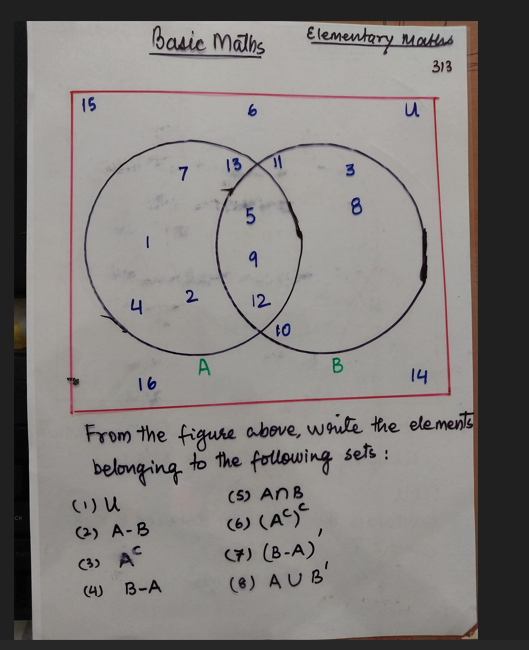
“Look closely at the structural design of today’s handwritten sheet from our active 1996–2005 classroom vault. We have intentionally stepped away from standard, formulaic layouts to target core conceptual tracking.
Take a Dip: Tutors, parents, and math hobbyists—how would you guide a student to navigate this specific system? We invite you to solve, analyze, and post your unique logical trajectories in the comments section below. Remember: in this river, there is always More than One Correct Possible Approach (MOCPA).”
Leave a Reply